Norris Geyser Basin: Discover Yellowstone's Dynamic Hydrothermal Heart
Deep within the heart of Yellowstone National Park lies a realm of raw, untamed power, a landscape shaped by superheated water, ancient volcanoes, and the relentless forces of geology. This is the Norris Geyser Basin, arguably the most volatile and fascinating hydrothermal area in the park. Unlike its more famous, predictable cousin Old Faithful, Norris offers a captivating, ever-changing spectacle of nature's dynamism, best experienced by embarking on the immersive Norris Geyser Basin loop.
Yellowstone is a mosaic of geothermal wonders, but Norris stands apart. It's renowned as the hottest and most acidic geyser basin, a distinction that fuels its remarkable activity. Here, you'll witness an extraordinary concentration of steam vents, vibrant hot springs, bubbling mud pots, and even spontaneous geysers, all in a relatively compact area. Exploring the Norris Geyser Basin loop is not just a walk; it's a journey into the Earth's very core, where the planet breathes and transforms before your eyes.
Unveiling the Unique Geology of Norris Geyser Basin
What makes Norris Geyser Basin so exceptionally intense? The answer lies deep beneath the surface, intertwined with Yellowstone’s colossal volcanic past and present. Norris sits at a critical geological intersection: it’s part of one of the world’s largest active volcanoes and lies near the convergence of three major fault lines. One fault extends from the north, another from the west, and both intersect with a ring fracture formed by the massive Yellowstone Caldera eruption approximately 640,000 years ago.
This trifecta of geological forces creates the perfect conditions for extreme hydrothermal activity. The proximity to these deep fractures allows superheated water, often exceeding the boiling point (a staggering 200°F / 93°C at this elevation), to rise rapidly to the surface. The high acidity results from specific underground chemical reactions, contributing to the basin's unique, often stark, appearance. This constant geological agitation means that Norris is in a perpetual state of flux, a living laboratory where the Earth's internal processes are laid bare.
Navigating the Norris Geyser Basin Loop: Your Immersive Trail Guide
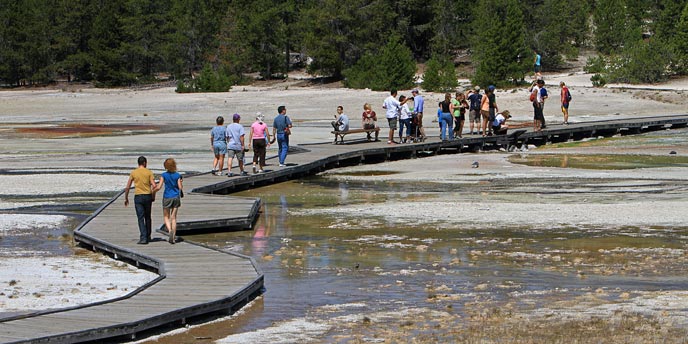
To truly appreciate the raw beauty and power of Norris, visitors embark on a comprehensive Norris Geyser Basin loop. This well-maintained network of boardwalks and marked trails typically spans about 3 miles round trip, offering an accessible yet profound experience into this otherworldly landscape. Plan to dedicate at least one, and ideally two, hours to fully absorb the sights, sounds, and even the distinct sulfurous scents of the basin.
The Norris Geyser Basin loop is comprised of two distinct, yet interconnected, areas: the Back Basin and the Porcelain Basin. Each offers a unique perspective on Yellowstone’s geothermal might:
- Porcelain Basin: Often the first area encountered, this basin is characterized by its expansive, stark, and often brightly colored landscape. The ground, leached of minerals by highly acidic waters, appears bleached white or painted with mineral stains. Here, you'll encounter a mesmerizing array of fumaroles (steam vents), bubbling acidic pools, and small, dynamic geysers. The open nature of Porcelain Basin often means direct sunlight, so prepare accordingly.
- Back Basin: A slightly more forested and often dramatic experience, the Back Basin features some of Norris's most impressive and unpredictable geysers, including Steamboat Geyser – the world's tallest active geyser, though its major eruptions are rare and irregular. Here, you might also find more vibrant mud pots and hot springs nestled amongst the trees.
While the overall Norris Geyser Basin loop is considered relatively easy, featuring mostly level terrain, there are a few short sections with steeper grades. The elevation change is approximately 190 feet over the entire loop. No matter which loop you start with or which cut-through paths you choose, the trails are intuitively designed to guide you back to the parking area. For a deeper dive into the specifics of navigating this incredible area, be sure to read our detailed guide: Explore Norris Geyser Basin: Yellowstone's Hottest Trail Guide.
Safety Tip: The ground in Norris Geyser Basin is extremely thin and fragile in many places, and the thermal features contain superheated, acidic water. For your safety and the preservation of this delicate environment, it is imperative to always stay on the marked boardwalks and trails.
Best Time to Visit and Avoiding the Crowds
Yellowstone’s geothermal basins, including Norris, are best experienced from late spring through early fall. This period offers the most favorable weather conditions and ensures that all park roads leading to the basin are open. During the peak summer months, Norris, like many other popular Yellowstone attractions, can become quite crowded.
To enhance your experience and avoid the peak rush, consider visiting early in the morning, ideally before 8 AM, or later in the afternoon, after 4 PM. During these shoulder times, you'll often find fewer people, allowing for more peaceful observation and photography. The Norris Geyser Basin loop is accessible at any time of day, offering stunning sunrises or dramatic afternoon light over its steaming features. Remember that most of the boardwalks are exposed to direct sunlight, so bringing sun protection like hats, sunglasses, and sunscreen is highly recommended, even if some sections offer a brief respite among the trees.
A Living Laboratory: The Ever-Changing Landscape of Norris
What truly sets Norris apart is its unparalleled dynamism. Unlike the relatively stable features found in some other basins, Norris is a living, breathing, and constantly evolving landscape. Each year, new hot springs and geysers may appear, while others fall dormant or change their eruption cycles. These transformations are often triggered by subtle geological events, even minor earthquakes, which can drastically alter subterranean plumbing, redirecting hot water and gases.
The chemistry of Norris's hot springs plays a significant role in this continuous transformation. In some areas, highly acidic waters dissolve underground rock, creating new channels and pathways. In others, hot water rises, depositing dissolved minerals like silica around vents and along subterranean passages. Sometimes, these mineral deposits can choke off existing water flows, forcing hot, pressurized water to seek new routes to the surface. This leads to the birth of new features, as well as the dramatic alteration of existing ones: clear pools can become violently muddy, and quiet hot springs can temporarily erupt as geysers.
This constant state of flux makes every visit to the Norris Geyser Basin loop a unique experience. It's a powerful reminder of the Earth's restless energy and a testament to the fact that our planet is a continuously active system. For a more in-depth exploration of how to make the most of your journey through this marvel, refer to our guide: Conquer Norris Geyser Basin: Your 3-Mile Loop Guide to Yellowstone's Wonders.
Conclusion
The Norris Geyser Basin is more than just a collection of thermal features; it's the dynamic hydrothermal heart of Yellowstone, a place where the planet's raw power is unmistakably on display. Embarking on the Norris Geyser Basin loop offers an unparalleled opportunity to witness the Earth's geological processes in real-time, from the steamy vents of the Porcelain Basin to the dramatic, unpredictable eruptions of the Back Basin. Its intense heat, acidity, and constant change create a landscape that is both beautiful and humbling. A visit here is an essential part of any Yellowstone adventure, promising an unforgettable encounter with one of nature's most extraordinary spectacles.
